

Norway introduces poultry by-products in salmon feed
Norwegian feed producers are exploring poultry-derived proteins to reduce reliance on marine ingredients, but questions remain over sustainability, animal welfare and consumer acceptance.
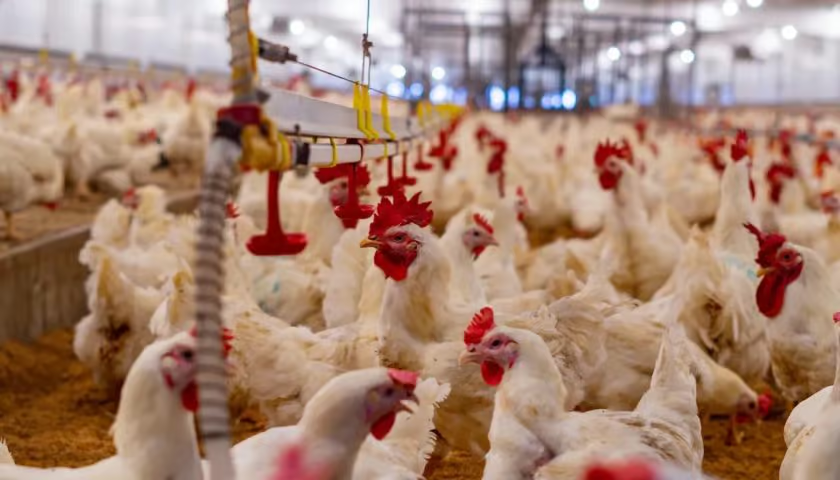
NORWAY – Norway’s aquaculture feed industry is beginning to add poultry by-products to salmon diets as producers seek alternatives to fishmeal, sparking debate over their nutritional value, environmental benefits, and implications for animal welfare.
Margareth Øverland, professor of aquaculture nutrition at the Norwegian University of Life Sciences, says poultry-derived proteins offer a locally available ingredient with a favourable amino acid profile that can support salmon growth.
However, the animal welfare organisation Eurogroup for Animals argues that replacing marine ingredients with poultry by-products risks shifting environmental and welfare pressures elsewhere in the food production system.
European restrictions on processed animal proteins, introduced following the bovine spongiform encephalopathy (BSE) crisis, were partially lifted in 2013 to permit their use in aquaculture feed.

Despite this, concerns about consumer acceptance have slowed adoption.
Poultry meal supports salmon growth
Research by Øverland found that salmon fed diets with moderate levels of poultry meal grew as well as fish receiving a commercial control diet containing fishmeal, soy protein concentrate, wheat gluten and rapeseed meal.
The research tested poultry meal inclusion of up to 10% and found no adverse effects on gut health, fish welfare indicators or product quality. Fish receiving the poultry meal-based diet also recorded a higher condition factor and lower skin ulcer scores.

Øverland said poultry-derived proteins are affordable and available in large quantities, making them a potential option for diversifying feed formulations. However, she noted that more evidence is needed to establish the effects of higher inclusion levels.
Replacing marine ingredients also presents nutritional challenges. Poultry oil lacks the long-chain omega-3 fatty acids found in fish oil, which are important for salmon health and the final product’s nutritional quality.
Feed producers can combine algal oil, which supplies long-chain omega-3 fatty acids, with poultry oil to help maintain an appropriate fatty acid balance.
Sustainability and sourcing under scrutiny
The British Retail Consortium said retailers work with suppliers to source more sustainable feed ingredients, considering environmental impacts and alternatives that could reduce pressure on wild fish populations.
Øverland argued that poultry by-products could deliver environmental benefits by replacing ingredients with higher life-cycle impacts.
She said assessments should account for poultry production, processing and transport, alongside changes in marine and plant ingredient use.
However, Keri Tietge, food systems project manager at Eurogroup for Animals, said sustainability assessments must also consider the welfare of animals supplying the by-products.
She highlighted concerns over intensive poultry production, including fast-growing breeds, high stocking densities and poor living conditions.
Tietge added that poultry meal can replace only part of the fishmeal used in salmon diets and does not eliminate reliance on fish oil.
Therefore, both the nutritional performance and sustainability of poultry-derived ingredients depend on formulation, sourcing, and transparent assessment.
Øverland said producers and retailers should clearly communicate feed composition and provide evidence of safety, fish health, and product quality to support consumer confidence.
Sign up HERE to receive our email newsletters with the latest news updates and insights from Africa and the World, and follow us on our WhatsApp channel for updates.
Be the first to leave a comment