
Dairy
-

Nigeria expands feed production to sustain dairy sector gains
The state is developing 110 hectares of grazing reserve for livestock feed production to sustain gains from Nigeria’s local dairy development programme.
-
Kenyan dairy farmers seek feed tax relief amid milk shortage
Farmers are demanding lower feed costs, stronger cooperatives, and better veterinary services as Kenya grapples with milk shortage.
-
IFF launches Omni-Bos™ PHY targeting MEA dairy industry
Phytase is widely used in poultry and swine, but conventional enzymes have had limited effectiveness in dairy cattle.
-
BL Agro invests US$174M in integrated dairy and genetics platform
The facility will combine genomic selection with IVF, embryo transfer and sex-sorted semen to accelerate the multiplication of animals carrying desirable traits.
-
Ethiopia launches digital livestock identification system for dairy cattle
The platform will provide a structured system for recording animal information and tracking livestock throughout their production and movement.
-
Heifer, Mastercard & KCB launch digital payments initiative for dairy farmers
The project aims to reach 30,000 smallholder dairy farmers over a nine-month pilot period.
-
Purabi Dairy launches premium cattle feed
WAMUL has supplied approximately 23,000 metric tonnes of cattle feed and 175 metric tonnes of mineral mixture since resuming operations.
-
Vivici secures US$14.4M EIC funding to scale precision-fermented dairy proteins
The company will usethe funding to increase production capacity and accelerate the commercialization of its precision-fermented dairy proteins.
-
Al Dahra signs MoU with Al Rawabi Dairy to strengthen dairy animal feed supply
This partnership reflects on shared ambition to strengthen food supply and drive greater efficiency across the dairy value chain.
-
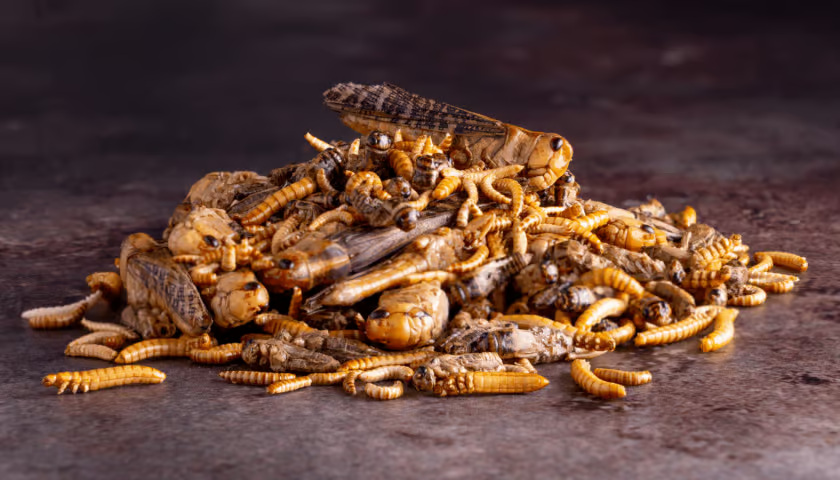
Top 10 alternative protein sources transforming animal feed in Africa and the Middle East
These innovations has the greatest potential to reshape the future of feed