
Alternative Feed
-

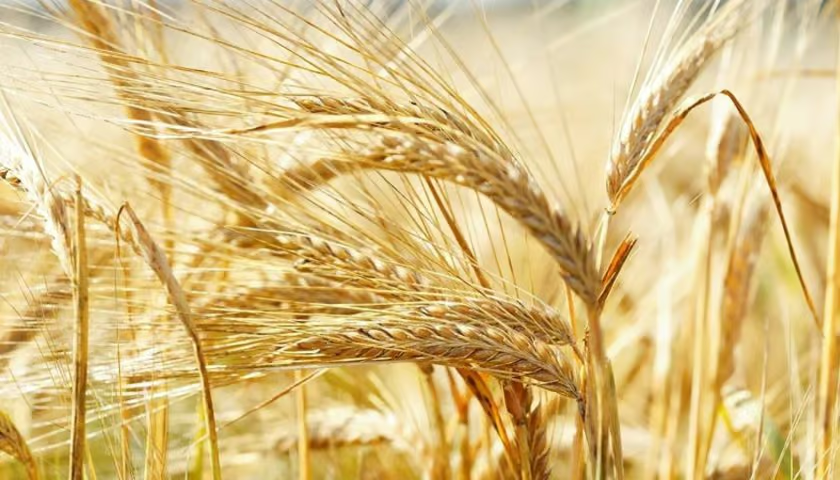
Kenya’s barley boom raises questions for animal feed supply
Rising export demand is widening the price gap between malting and feed-grade barley, with implications for ingredient sourcing and competition with maize.
-
Novonesis hosts Algiecel’s microalgae facility in Denmark
The Kalundborg facility expands production capacity nearly fivefold to support the development of alternative marine ingredients for pet food and cosmetics.
-
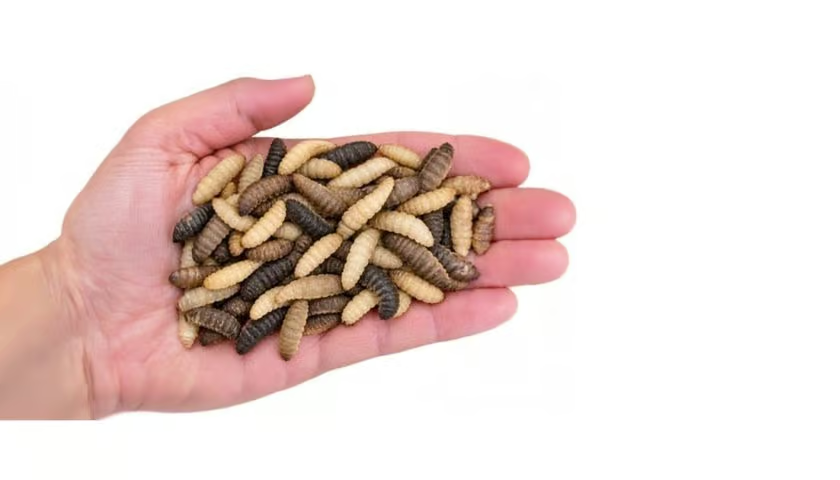
Innovafeed, Protix study finds insect protein gains at scale
The assessment argues that industrial-scale production, circular feedstocks and animal-nutrition benefits can improve the sustainability case for insect protein.
-
Elian secures US$45.7M to expand European feed protein supply
The soybean processing will add more than 100,000 tonnes of annual protein ingredient capacity for animal feed and food.
-
Philippines explores millet to strengthen livestock feed security
The Philippines is exploring drought-tolerant millet as an alternative to corn to strengthen livestock feed supplies amid El Niño risks.
-
Rwanda turns cassava peels into animal feed ingredient
The initiative tackles cassava waste and high animal feed costs.
-
IAEA launches five-year project to strengthen insect feed safety
The plan will close safety and regulatory gaps that could otherwise slow the wider adoption of insect-based ingredients in animal feed.
-
Nasekomo, REINARTZ target commercial-scale BSF feed production
The development signals a shift from insect-feed pilots to integrated commercial-scale production.
-
Switzerland releases protein feed reserves amid import disruption
Companies can access nearly 16,000 tonnes of the country’s stored protein feed reserves from September 1, 2026, through February 2027.
-
Miami researchers explore sargassum-to-feed solution using black soldier flies
The research could support new applications in aquaculture and agriculture.