
ANIMAL FEED
-

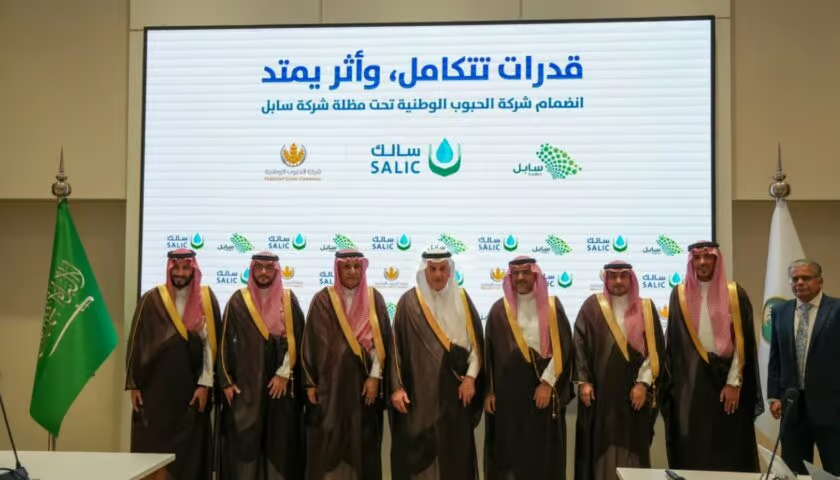
SALIC transfers National Grain Company to SABIL to strengthen feed supply
Saudi Arabia is integrating international feed-ingredient sourcing with domestic grain storage and distribution to strengthen supply-chain resilience.
-
BioMar launches BioRetain to improve nutrient utilisation in aquafeeds
The formulation concept aims to improve nutrient retention and feed efficiency while giving manufacturers greater flexibility in raw material selection.
-
Kenya introduces Livestock Bill to regulate animal feeds
The proposed law would establish a dedicated livestock regulator, research institutions and a development fund to strengthen production, animal health and market access.
-
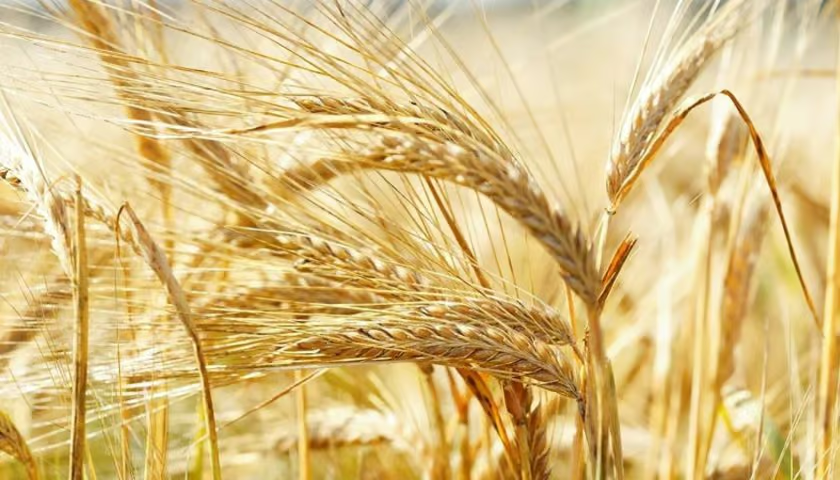
Kenya’s barley boom raises questions for animal feed supply
Rising export demand is widening the price gap between malting and feed-grade barley, with implications for ingredient sourcing and competition with maize.
-
OMNI launches functional dog foods targeting joints, skin and calm
The three complete dog food formulas incorporate targeted nutritional ingredients into daily meals.
-
Muyuan advances US$139.6M pig and feed complex in Vietnam
The integrated project includes a 360,000-tonne-a-year feed plant and a pig farm designed for expansion to 2 million pigs.
-
MIMO feed factory raises capacity to 50 tonnes a day
Automation has raised the factory’s daily production capacity from 5 tonnes to 50 tonnes, as the company aims to boost livestock productivity and farmers’ incomes.
-
Nigeria expands feed production to sustain dairy sector gains
The state is developing 110 hectares of grazing reserve for livestock feed production to sustain gains from Nigeria’s local dairy development programme.
-
Fixkraft opens expanded feed processing facility
The multifunctional silo comprises a 12,000-cubic-meter silo system and a modern hydrothermal processing plant for oilseeds, including soybeans and rapeseed.
-
Kenyan dairy farmers seek feed tax relief amid milk shortage
Farmers are demanding lower feed costs, stronger cooperatives, and better veterinary services as Kenya grapples with milk shortage.