

Tanzania researchers explore livestock feed from sisal waste
The AgroVal project is investigating ways to turn sisal residues into feed, fertiliser and bioenergy, creating potential new revenue streams from agricultural waste.
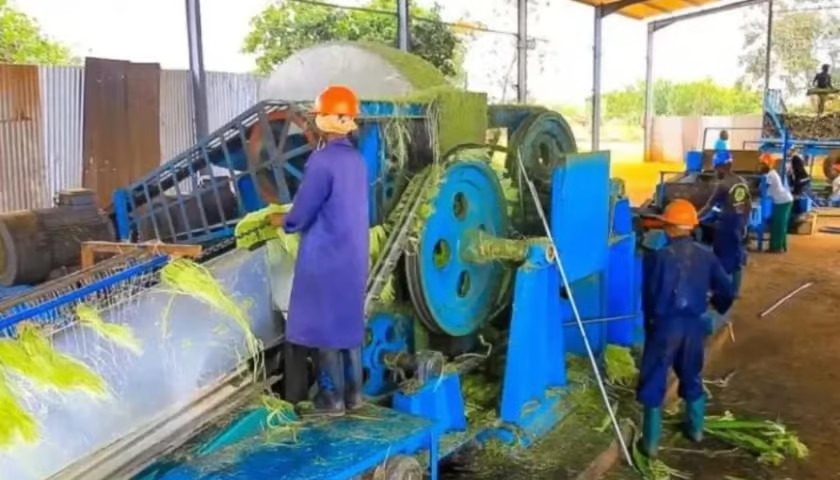
TANZANIA – Researchers in Tanzania and partner institutions are exploring ways to convert sisal-processing waste into livestock feed, fertiliser, bioenergy and wood-like materials, in a project aimed at increasing resource efficiency and developing new uses for agricultural residues.
The research is being conducted under AgroVal, formerly known as Sustainable Valorisation of Agro-Industrial Residues through Integration of Food, Bioproducts and Bio-Energy Production.
The consortium includes the Nelson Mandela African Institution of Science and Technology (NM-AIST) in Tanzania, the Technical University of Denmark, Pwani University in Kenya, and other collaborating institutions.
Tanzania Sisal Board (TSB) Director General Saad Kambona said only about 2% of the sisal crop is used for fibre production, leaving much of the remaining biomass underutilised.

Converting these residues into marketable products could diversify the sisal industry while reducing waste.
For the animal feed sector, the research offers a potential route to recover value from agricultural by-products.
The project is also investigating fertiliser production using black soldier fly larvae, which process organic waste into insect biomass and nutrient-rich material for agricultural use.
Researcher Dr Aziza Konyo said the team had established the insect-based process’s potential and worked with African Fibres Company at Mdaula to set up a small-scale fertiliser production plant.

The wider project is examining other uses for sisal residues, including producing wood-like materials that could provide an alternative raw material for some timber applications.
Researchers are also exploring bioenergy production, including plans for a larger facility to convert waste into gas.
NM-AIST researcher Dr Clemence Ansbert said the wood-like material could help reduce dependence on timber obtained through tree felling.
Its contribution to forest conservation will depend on its commercial viability and how much it can replace conventional wood products.
Kambona said the Tanzania Sisal Board was working with institutions including the Tanzania Agricultural Research Institute, NM-AIST, the University of Dar es Salaam and the University of Dodoma to develop commercially viable applications for agricultural residues.
Led by Professor Anthony Mshandete, the AgroVal project began on March 1, 2022, and is scheduled to run until May 31, 2027. It has received funding of 11,998,331 Danish kroner (approximately US$1.75 million).
Researchers and the board are seeking investors to help move promising applications towards commercial production.
Further development will be needed to establish the technical and economic feasibility of the different products, including the potential use of sisal residues in livestock feed.
Sign up HERE to receive our email newsletters with the latest news updates and insights from Africa and the World, and follow us on our WhatsApp channel for updates.
Be the first to leave a comment