

Rwanda to distribute 15 million pasture grass seedlings to livestock farmers
The initiative aims to improve fodder availability, support milk production, and reduce livestock losses during dry seasons.
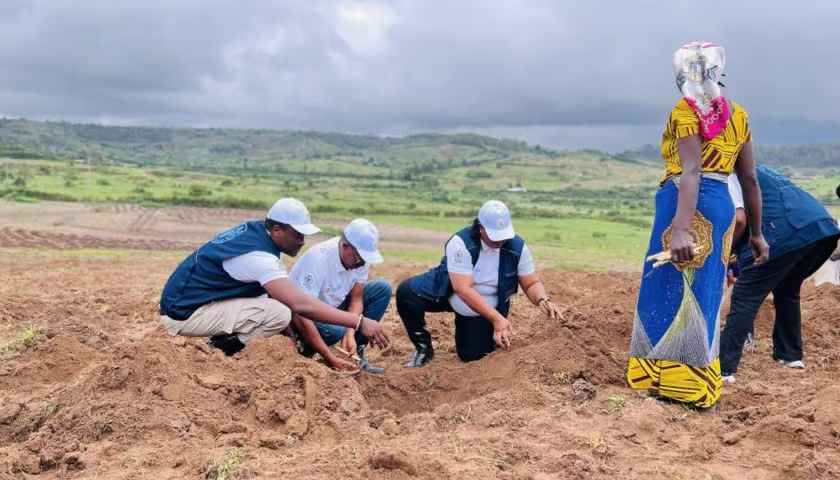
RWANDA – The Rwandan government plans to distribute 15 million pasture grass seedlings to livestock farmers nationwide to address feed shortages and strengthen livestock production.
The Ministry of Agriculture and Animal Resources (MINAGRI) announced the programme on 30 October during the launch of a grass-planting season in Nyagatare District, where two million Juncao Napier grass seedlings have already been distributed.
Supported by the Food and Agriculture Organization (FAO), the initiative encourages farmers to establish their own fodder plantations and reduce dependence on natural pasture, which becomes scarce during periods of low rainfall.
Juncao Napier grass is being promoted for its nutritional value and potential to support milk production, as well as its ability to withstand changing weather conditions, including dry spells.

Minister of State for Agriculture and Animal Resources Solange Uwituze urged farmers to adopt improved fodder varieties, zero-grazing practices and balanced feeding.
She said feed shortages remained a major challenge to profitable livestock farming, particularly during dry seasons.
“During dry seasons, some farmers lose their cows because they have nothing to feed them,” Uwituze said, adding that the government would distribute seedlings and provide technical guidance to help farmers establish grass plantations.
In Nyagatare, the two million seedlings are expected to cover 125 hectares. Distribution began with farmers who had already prepared their land for planting.

Drought highlights need for reliable livestock feed
The intervention follows a severe drought in the district earlier this year, which reportedly killed at least 80 cattle as farmers struggled to secure enough feed.
Local farmers said the losses had highlighted the need to grow and preserve fodder ahead of dry periods. Steven Njenje said the experience had shown farmers the risks of depending entirely on rainfall to sustain their animals.
Deny Kayisire welcomed the initiative, saying farmers were ready to adopt improved fodder production and more modern livestock management practices.
FAO Representative in Rwanda Mohamed Aw Dahir said the agency would continue supporting farmers to improve agricultural production and strengthen food security.
The government is encouraging beneficiaries to share planting materials after harvesting, allowing other livestock keepers to establish fodder plots and expand access to improved animal feed.
Sign up HERE to receive our email newsletters with the latest news updates and insights from Africa and the World, and follow us on our WhatsApp channel for updates.
Be the first to leave a comment