

Kenya’s shortage of animal health lab auditors prompts regional training
The regional programme aims to build local expertise in laboratory quality management.
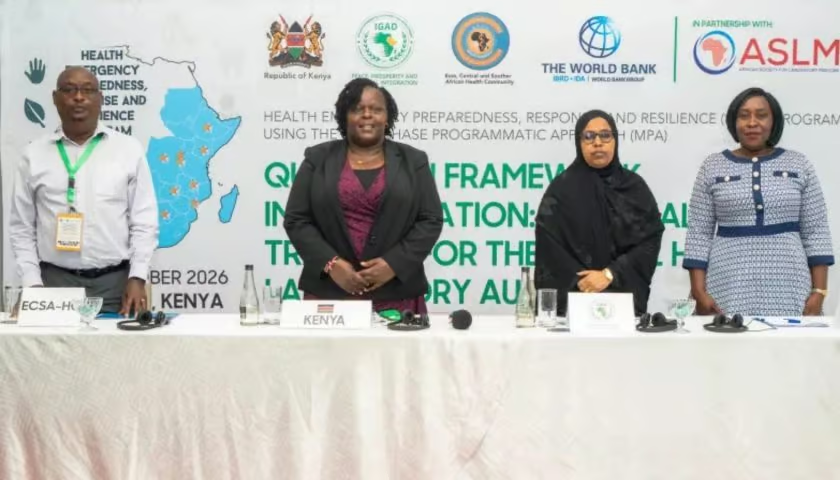
KENYA – A shortage of qualified animal health laboratory auditors is prompting regional efforts to strengthen diagnostic capacity across Eastern and Southern Africa, with a new training programme seeking to improve disease detection and laboratory quality management in nine countries.
The Intergovernmental Authority on Development (IGAD), the East, Central and Southern Africa Health Community (ECSA-HC) and the African Society for Laboratory Medicine (ASLM) launched a five-day regional training programme in Machakos, Kenya, on 19 October 2026.
Kenya has only nine certified animal health laboratory auditors, highlighting a capacity gap that can leave countries reliant on external expertise to assess laboratory standards and guide improvements.
The programme aims to train auditors and trainers to assess laboratory performance, identify weaknesses, recommend corrective action and help facilities progress towards international accreditation.

Kenya’s Deputy Director of Veterinary Services, Dr Romona Ndanyi, said the shortage of qualified auditors could increase assessment costs, delay evaluations and undermine the sustainability of laboratory quality systems.
Participants from Kenya, Mozambique, Zambia, Rwanda, the Democratic Republic of the Congo, São Tomé and Príncipe, Malawi, Ethiopia and Burundi are expected to apply their training in their home countries, conduct assessments and mentor laboratory personnel.
Improving livestock disease detection
Animal health laboratories are essential for identifying and monitoring livestock diseases, including zoonoses that can spread between animals and humans.

Reliable diagnostic results help veterinary authorities detect outbreaks, guide disease-control measures and limit the risk of infections spreading across borders.
IGAD Head of Mission to Kenya, Ambassador Fatuma Adan, said preparedness requires competent personnel and quality-assured laboratories that can detect and characterise health threats before they spread.
The training is being conducted under the Health Emergency Preparedness, Response and Resilience Programme (HEPRR-MPA), which aims to strengthen regional preparedness, detection and response capacities.
It also introduces participants to QualiPATH, a structured framework for improving laboratory quality management based on ISO/IEC 17025 principles. Completing a QualiPATH assessment does not itself confer international accreditation.
For livestock producers and veterinary services, stronger laboratory systems could support earlier diagnosis, more timely interventions and better monitoring of animal diseases.
However, lasting improvements will depend on retaining trained personnel, maintaining diagnostic equipment and ensuring laboratories have the resources to implement recommended changes.
Sign up HERE to receive our email newsletters with the latest news updates and insights from Africa and the World, and follow us on our WhatsApp channel for updates.



Be the first to leave a comment